
Supporting Local Heroes: Special Savings Available For Veterans & First Responders
Commercial Roofing in Anoka County
Commercial Roofing in Anoka County and the Twin Cities, With Fewer Surprises for Your Building
What Commercial Roofing Covers
Commercial Roof Replacement, Repair, and Inspection in the NW Metro
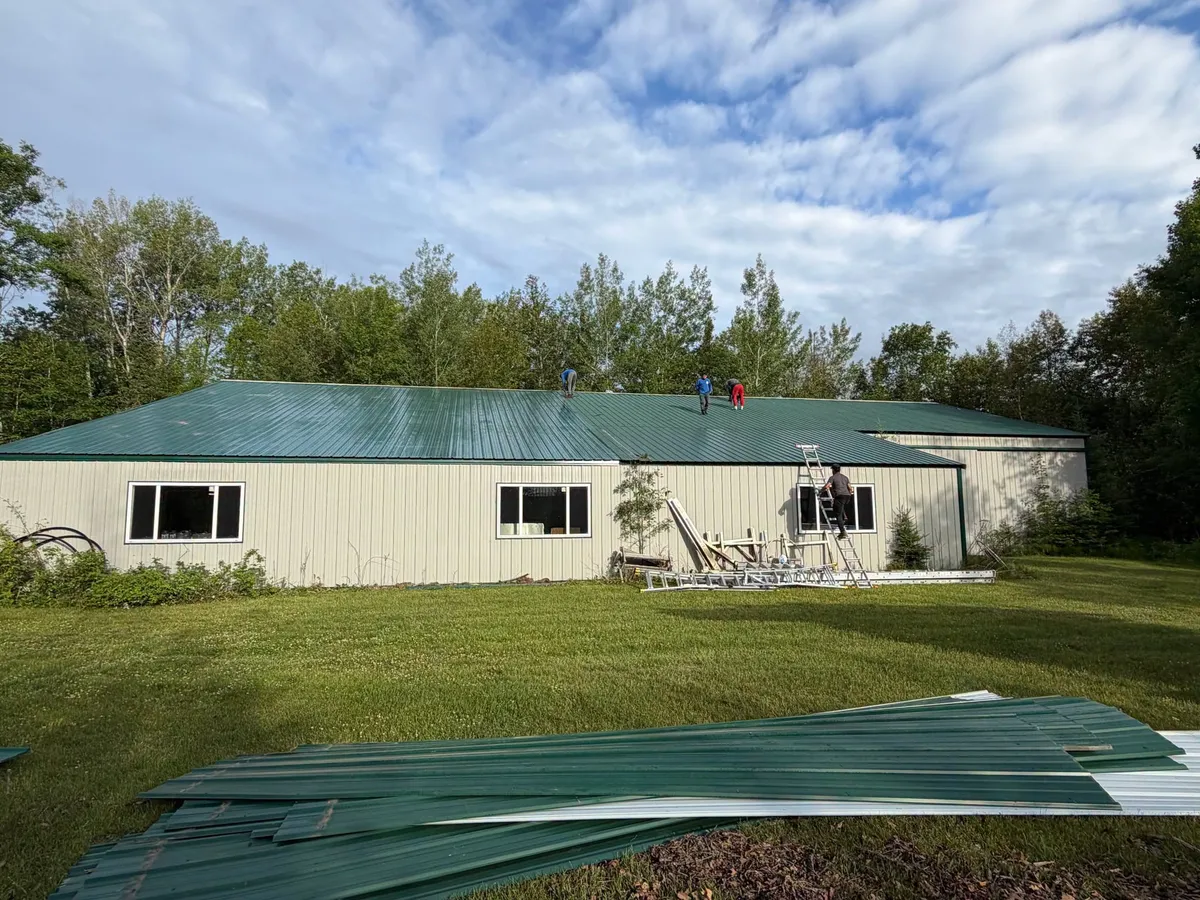
Commercial roofing covers the replacement, repair, and inspection of roofs on offices, retail spaces, warehouses, and other non residential buildings. Many commercial roofs are low slope or flat, which means they rely on membrane systems and good drainage rather than the shed and overlap design of a residential shingle roof. Owners and property managers search for it when a roof leaks over tenants, when a lease or sale calls for a roof inspection, or when a storm damages the building. It differs from residential work in scale, scheduling, and the need to keep a business running during the job.
Commercial roof replacement: Full replacement planned around the building's operations and budget, from tear off to final inspection.
Commercial roof repair: Leak response and targeted repair for membranes, flashing, penetrations, and drains on commercial roofs.
Roof inspections and maintenance: Scheduled inspections that catch ponding water, worn seams, and failing flashing before they become leaks.
Storm and hail damage: Documentation and repair for commercial roofs hit by hail or wind, including support through an insurance claim.
Special Savings Offer
Get Your Free Estimate & Safeguard Your Property Today
Why and When It Matters
What Makes a Commercial Roof Different, and When to Act on It
A commercial roof carries a different kind of risk than a house roof. A leak over inventory, equipment, or tenants can interrupt business, trigger claims, and strain relationships that matter far more than the repair bill. Low slope and flat roofs also depend on drainage working properly, since standing water, called ponding, stresses the membrane and the seams over time. Commercial properties often have more penetrations, such as rooftop units, vents, and drains, and each one is a place where a leak can start. Minnesota adds heavy snow loads and freeze thaw cycling, which test seams and flashing every winter. Because commercial roofs are expensive, owners also tend to think in terms of lifecycle and budget, which means timing the work matters as much as the work itself. Deferred maintenance is one of the most common reasons a roof that could have lasted years needs replacing early. The sections below explain what drives commercial roofing decisions and when to schedule the work.
Why commercial roofs need a different approach
Drainage decides the lifespan: Ponding water on a low slope roof shortens the life of the membrane and stresses the seams. Keeping drains clear and the surface sloping toward them is a basic part of keeping the roof sound.
Downtime has a real cost: A leak over a tenant space or stock room interrupts business and can lead to claims. Planning repairs and replacements around operations protects the people inside the building.
Penetrations are weak points: Rooftop equipment, vents, and drains all need correct flashing and sealing. Maintenance at these spots prevents most commercial leaks.
Maintenance extends the life of the roof: Regular inspections catch small problems before they spread. Roofs that are checked tend to last longer than roofs that are only looked at after a leak.
When to schedule commercial roof work
Before winter snow loads arrive: Fall is the best time to fix seams and drains so the roof goes into the heaviest season in good shape.
After any hail or wind event: Prompt inspection documents damage close to the date of loss and supports any insurance claim that follows.
At lease, sale, or refinance milestones: Buyers, lenders, and tenants often want to know the condition of the roof. An inspection ahead of time avoids surprises in negotiations.
During budget planning: Scheduling a replacement as part of a planned budget is almost always better than paying for an emergency after a failure.
How Commercial Roofing Gets Done
The Elevation Exteriors Commercial Roofing Process
Step 1: Site walk with a dedicated point of contact
A project manager walks the roof with the owner or property manager, checking drainage, seams, flashing, and penetrations. The same person stays with the project from the first call to the last day.
Step 2: A line by line estimate
The estimate is broken down so decision makers can see exactly what each item covers. Free, accurate estimates are a standard part of the process, and questions are answered in depth before any commitment.
Step 3: Scheduling around your operations
Work is planned to limit disruption to tenants and customers. Timelines are shared up front and updated if conditions change.
Step 4: Installation and repair to manufacturer standards
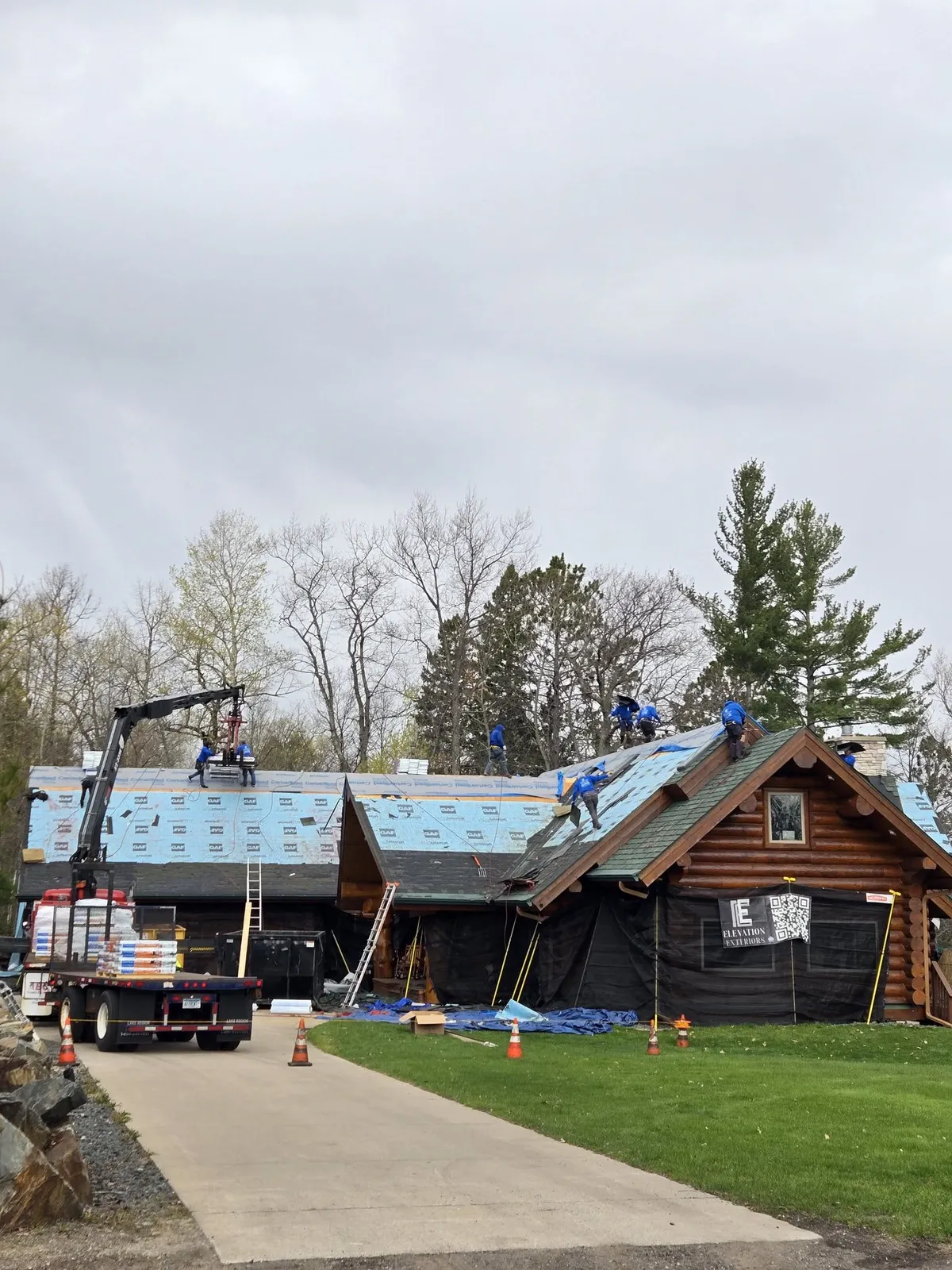
The crew follows manufacturer installation standards for the system being installed. Elevation Exteriors is CertainTeed Premier ShingleMaster certified.
Step 5: Text updates through the job
You get text updates as work progresses, so you are never left guessing what is happening on the roof. Clear project communication is the thing Elevation Exteriors sets out to do differently from other contractors.
Step 6: Cleanup and closeout walkthrough
The site is cleaned, nails and debris are swept with magnetic rollers, and the project manager walks you through what was done. You leave with a clear record of the work.
FAqs
Common questions Your Neighbors Are asking
What types of commercial roofs do you work on?
Commercial buildings typically have either low slope roofs with membrane systems or steeper roofs with shingle or metal coverings. The right approach depends on the building design and drainage.
How do you limit disruption to my business during a roof job?
Work is scheduled around your operations, and timelines are shared up front so you can plan. A dedicated point of contact and text updates keep you informed as the job progresses. You can ask about specific working hours during the estimate.
Can you inspect my roof before a lease renewal or sale?
Yes, an inspection can document the current condition of the roof, including drainage, seams, flashing, and any active leaks. A clear written record helps in negotiations and budget planning.
How should I budget for commercial roof replacement?
The size of the roof, the system chosen, the condition of the decking or substrate, and the number of penetrations all drive cost. A free estimate and a roof inspection give you a specific figure to plan around. Planning ahead is usually far less costly than an emergency replacement.
Elevating Exteriors Across The Greater Twin Cities.
St. Francis MN
East Bethel MN
Blaine MN
Anoka MN
Coon Rapids MN
Ramsey MN
& More




The Twin Cities' Trusted Exterior Contractor. Proudly Serving Andover, MN and the surrounding NW Metro.
Licensed & Insured in MN: #cR806992
Copyright 2026. Elevation Exteriors. All rights reserved.