
Supporting Local Heroes: Special Savings Available For Veterans & First Responders
Roof Insurance Claim Help in Andover
Roof Insurance Claim Help in Andover, MN From a Crew That Talks to Your Adjuster So You Do Not Have To
What Claim Support Covers
Roof Insurance Claim Support for Andover and Anoka County Homeowners
Insurance claim roofing is the work of getting a damaged roof documented, scoped, approved, and replaced through a homeowners insurance claim. It covers the paperwork and communication around the roof as well as the roof itself. Homeowners search for it after a storm, when an adjuster has visited, or when a scope of loss arrives that looks incomplete. The service sits between the homeowner and the carrier, translating roofing details into the language an adjuster needs.
Damage documentation: Photos and notes on every area of storm damage, organized so an adjuster can follow what was found.
Adjuster communication: Direct conversation with your adjuster about the roof, including meeting on site when that helps.
Scope of loss review: A line by line check of the carrier's scope against what the roof actually needs.
Claim supplementing: A documented request for items the first scope missed, such as flashing, ventilation, or decking.
Replacement after approval: Scheduling and completing the new roof once the revised scope is approved, followed by the final invoice and depreciation release.
Special Savings Offer
Get Your Free Estimate & Safeguard Your Property Today
Why and When It Matters
Why Roof Claims Feel Overwhelming, and When to Start the Process
For many homeowners, the claim is the most stressful part of a damaged roof. The process has several steps that all depend on each other. The homeowner files, an adjuster inspects, a scope of loss is issued, the contractor reviews it and supplements if items were missed, the carrier approves the revised scope, the work is scheduled and completed, and then the final invoice is sent and depreciation is released. Each step uses vocabulary and documentation that most people have never needed before. A scope that leaves out ventilation, flashing, or damaged decking can leave the homeowner paying the difference out of pocket if nobody catches it. Minnesota hail and wind seasons also mean carriers and adjusters are busy at the same time homeowners are anxious, so details can slip. Having a roofer who understands the process and works with the adjuster directly is one of the most helpful things a homeowner can have during a claim. The sections below explain what makes claims go well and when to begin.
Why support during a claim matters
Adjusters are not roofers: An adjuster has to evaluate many properties quickly, and a scope can leave out items that a roofer would see as part of the job. A contractor who speaks both languages helps close that gap.
Documentation drives decisions: Claims are decided on photos, measurements, and written scope. Clear, dated documentation of the damage and the decking condition gives the carrier what it needs to approve the work.
Supplements recover missed items: When the first scope misses flashing, ventilation components, or decking found during tear off, a supplement documents the need and requests the change. This is a normal part of many claims and not a sign anything went wrong.
The homeowner should not carry the whole load: Having someone handle the roofing side of the conversation lets the homeowner focus on their policy and their family instead of learning the technical details on a deadline.
When to start
As soon as storm damage is suspected: Policies include reporting windows after the date of loss, and those vary by carrier. Photos taken close to the storm are the strongest evidence.
Before an adjuster visit: Having the roof inspected and documented first means the adjuster can see the damage with a clear picture of what was found. It does not replace the adjuster's own inspection.
Before signing a contingency agreement: Read any agreement carefully and take the time to compare contractors. A reliable roofer does not need a same day signature.
Before the fall rush: Roofing demand climbs in September and October, so starting a claim earlier in the season shortens waits for materials and crews.
How Claim Support Works
The Elevation Exteriors Insurance Claim Process
Step 1: Free inspection and photo documentation
The roof is inspected and every area of damage is photographed. You get a dedicated point of contact who explains what the photos show and how they relate to your claim.
Step 2: You file, and we prepare the scope
You file with your carrier, and Elevation Exteriors prepares a written scope of damage you can share with the adjuster. Nothing is promised about coverage, since that decision belongs to the carrier.
Step 3: Adjuster communication
Elevation Exteriors speaks with your adjuster directly about the roof, including meeting on site if useful. Text updates keep you informed at every milestone so you never have to wonder where the claim stands.
Step 4: Scope review and supplement
When the scope of loss arrives, it is reviewed line by line against what the roof needs. If items were missed, a supplement is documented and submitted, and the decking photos taken during tear off support it.
Step 5: Replacement as a CertainTeed Premier ShingleMaster certified contractor
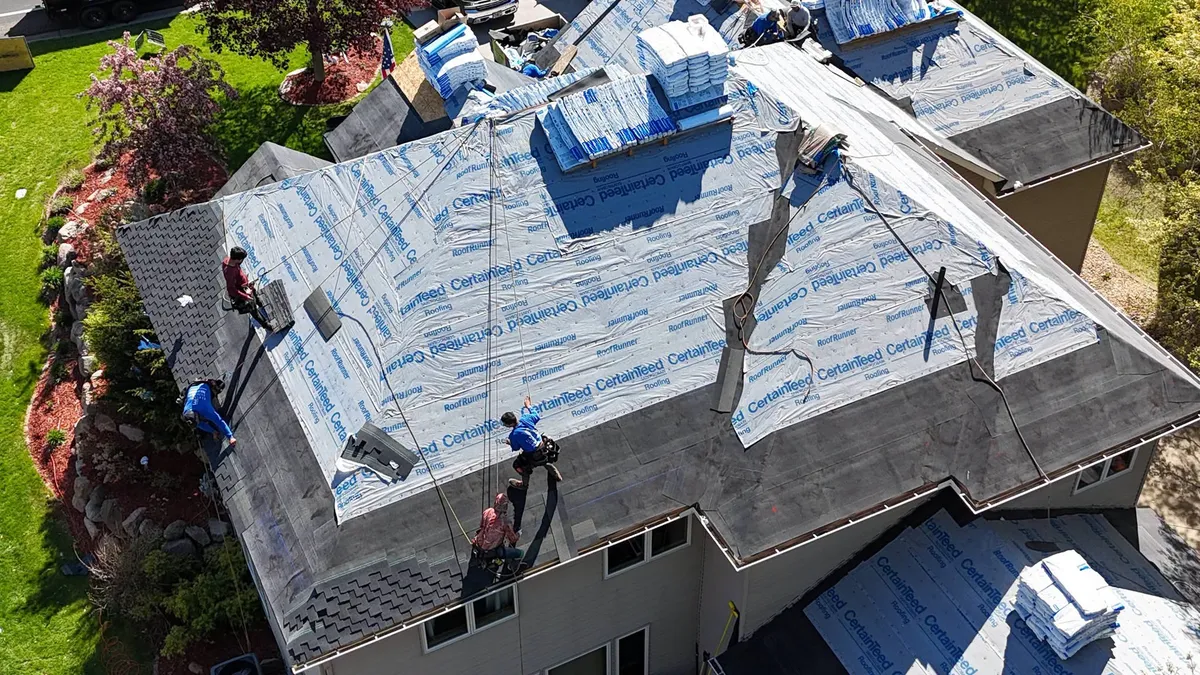
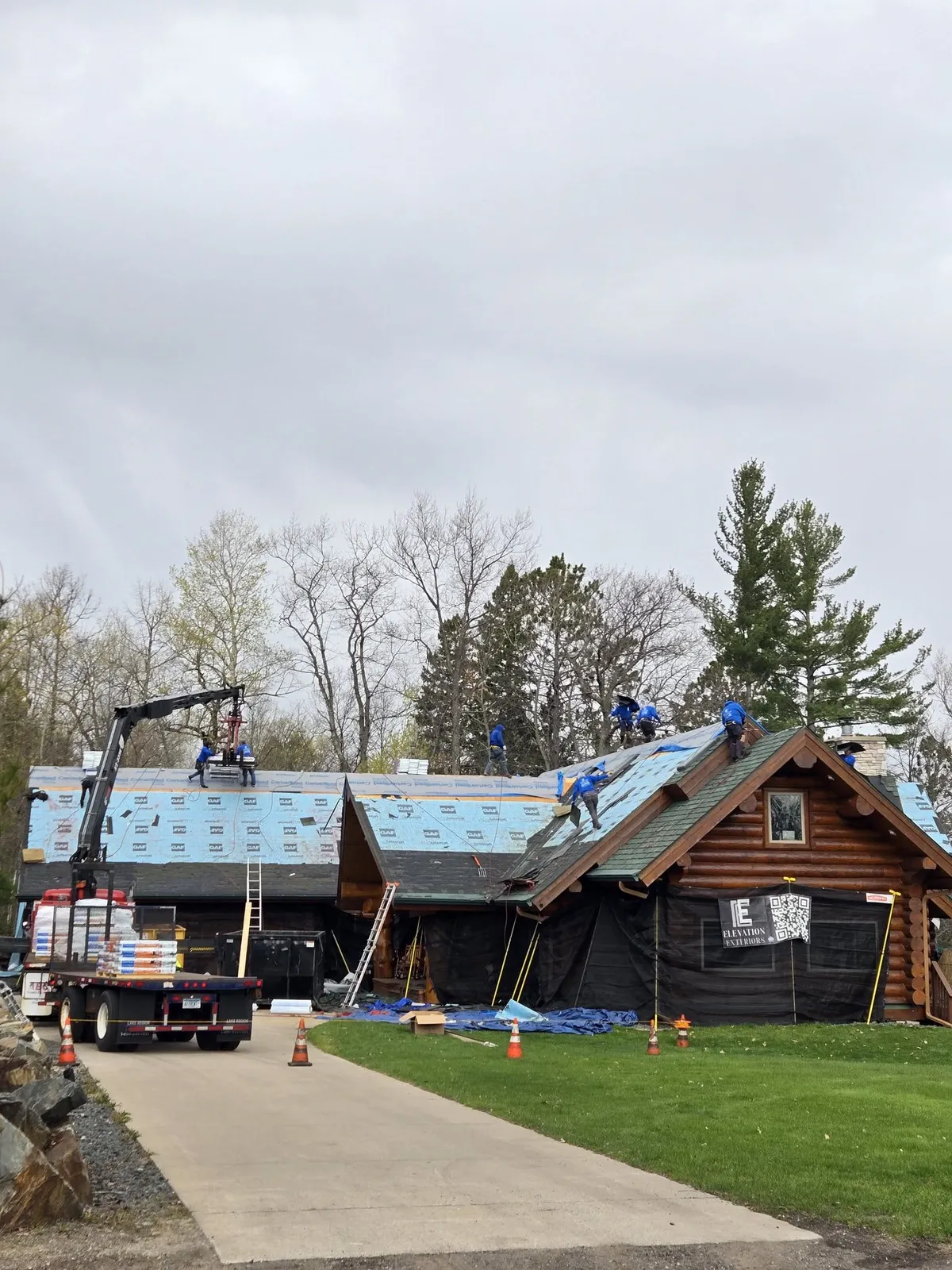
After approval, the roof is replaced and supported by a 50 year warranty covering materials and labor. The same crew finishes in a day for a standard roof, with a magnetic sweep to clear nails.
Step 6: Final invoice and depreciation explained
Your project manager walks you through the final invoice and the release of recoverable depreciation so you understand the paperwork at the end. Sharing how the money flows is part of leaving you in control.
FAqs
Common questions Your Neighbors Are asking
Will insurance pay for a new roof?
That depends on your policy and the cause of the damage. Storm damage from hail and wind is commonly covered when it is reported promptly and well documented, while wear and age are typically not. Elevation Exteriors documents the damage and works with your adjuster, but the carrier makes the final decision.
What is a supplement?
A supplement is a request to the carrier to add items that the first scope of loss missed, such as flashing, ventilation parts, or decking found damaged during tear off. It is a normal part of many roofing claims. A clear photo record is what makes a supplement easy to approve.
Do I have to use the contractor my insurance company recommends?
In general, homeowners choose their own contractor, though you should confirm the details in your own policy. Choosing a local roofer with a permanent address and a record of reviews is a reasonable way to protect yourself. You can always ask your carrier how they handle contractor selection.
What is depreciation, and when do I get it back?
Many policies pay a portion of the claim up front and hold back depreciation until the work is finished and documented. Once the roof is complete and the final invoice is submitted, the held back amount is released if your policy allows. Your project manager explains how this works on your claim.
Can you guarantee my claim will be approved?
No contractor can, because the carrier and your policy decide. What Elevation Exteriors can do is document the damage thoroughly, explain it clearly to the adjuster, and make sure the scope reflects what the roof needs. That gives your claim the strongest footing.
Elevating Exteriors Across The Greater Twin Cities.
St. Francis MN
East Bethel MN
Blaine MN
Anoka MN
Coon Rapids MN
Ramsey MN
& More




The Twin Cities' Trusted Exterior Contractor. Proudly Serving Andover, MN and the surrounding NW Metro.
Licensed & Insured in MN: #cR806992
Copyright 2026. Elevation Exteriors. All rights reserved.