
Supporting Local Heroes: Special Savings Available For Veterans & First Responders
Roof Repair in Andover and Anoka County
Roof Repair in Andover, MN That Starts With Finding the Real Source of the Leak
What Roof Repair Covers
Targeted Roof Repair for Leaks, Damaged Shingles, and Failed Flashing
Roof repair fixes a specific failure on a roof that otherwise has life left in it, such as a leak, a patch of missing shingles, or a flashing seam that has opened. It is narrower than a replacement and depends on first finding where the water is really getting in. Homeowners in Andover search for it after spotting a ceiling stain, losing shingles in a windstorm, or hearing dripping in the attic. The best repairs address the cause of the problem, not just the place where the water shows up inside the house.
Leak diagnosis and repair: Tracing a leak from the interior stain back to its true entry point on the roof. Water often travels well away from where it comes in.
Flashing repair: Step flashing, chimney flashing, and valley flashing resealed or replaced where it has failed. Flashing causes more leaks than any other roof component.
Pipe boot replacement: Cracked rubber collars around vent pipes replaced before water follows the pipe into the attic. A small part that fails often.
Shingle replacement: Missing, cracked, or lifted shingles replaced and sealed down. Matched to the existing roof as closely as possible.
Ridge cap and vent repair: Loose ridge cap and damaged vents repaired where wind or age has opened gaps at the peak of the roof.
Special Savings Offer
Get Your Free Estimate & Safeguard Your Property Today
Why and When It Matters
Why Roof Leaks Are Rarely Where They Look, and When a Repair Is the Right Call
Roof leaks are among the most misread problems in a house. Water that enters at one point can run along a rafter or across the decking for several feet before it drips from a ceiling, so the stain inside rarely lines up with the damage outside. Most leaks start at details like flashing, pipe boots, and vents rather than in the open field of shingles, because those are the places where different materials meet and where movement from the freeze thaw cycle works hardest. A patch that treats the visible stain without finding the entry point can hold for a month and then fail, which sends the homeowner back to the same ceiling. Minnesota winters add ice damming, which can drive water up under shingles in ways that rain alone would not. A good repair starts with a proper diagnosis and ends with an honest read on whether the roof has enough life left to justify the work. The sections below explain why small repairs matter and how to tell when it is time to act.
Why a Repair Is Worth Doing Right
Leaks travel before they show: Water follows rafters, decking seams, and framing before it reaches a ceiling. The stain is a symptom that appears after the water has already traveled, so fixing the stain location often misses the real entry point.
Small leaks rot decking and soak insulation: Even a slow drip keeps the plywood decking and attic insulation wet for weeks. Wet decking rots and wet insulation loses its value, and both become far more expensive than the original repair.
Roofs fail at the details: Flashing, pipe boots, and vents wear out well before shingles in the field do. Replacing these specific parts often restores a roof that looks worse than it really is.
A good repair is matched to the roof's age: A repair on a roof with years left is a smart investment. On a roof at the end of its life, the same money is better applied toward a replacement, which is why the assessment matters.
When to Schedule a Repair
As soon as a stain, drip, or musty attic smell appears: Each rain or snowmelt adds more water to decking and insulation. Early repairs cost less and limit the secondary damage.
After a windstorm or hail event: Missing or lifted shingles can look minor from the ground while exposing decking to the next rain. Prompt repair also keeps the damage record clear if an insurance claim follows.
Before winter sets in: A leak that goes into freezing weather becomes an ice dam candidate, and ice can push water further under the roof covering. Getting repairs done in fall avoids that.
As part of a seasonal check in spring and fall: A short inspection after winter and before the next one catches worn flashing and loose ridge cap before they become leaks.
How a Repair Gets Done
The Elevation Exteriors Roof Repair Process
Step 1: Leak Triage with a Dedicated Point of Contact
You describe what you are seeing and get one person who stays with the job from the first call. The crew checks the interior stain, the attic, and the roof above to trace the water back to its source.
Step 2: Photos of What Was Actually Wrong
The cause of the leak is photographed so you can see the failed flashing, cracked boot, or lifted shingle for yourself. Sharing the evidence is how you can judge the repair without taking anyone's word for it.
Step 3: An Honest Repair or Replace Assessment
If the roof has plenty of life left, you are told a repair is the right move. If the roof is near the end, you are told that too, along with what a replacement would involve. The decision stays with you.
Step 4: Repair Using the Right Materials
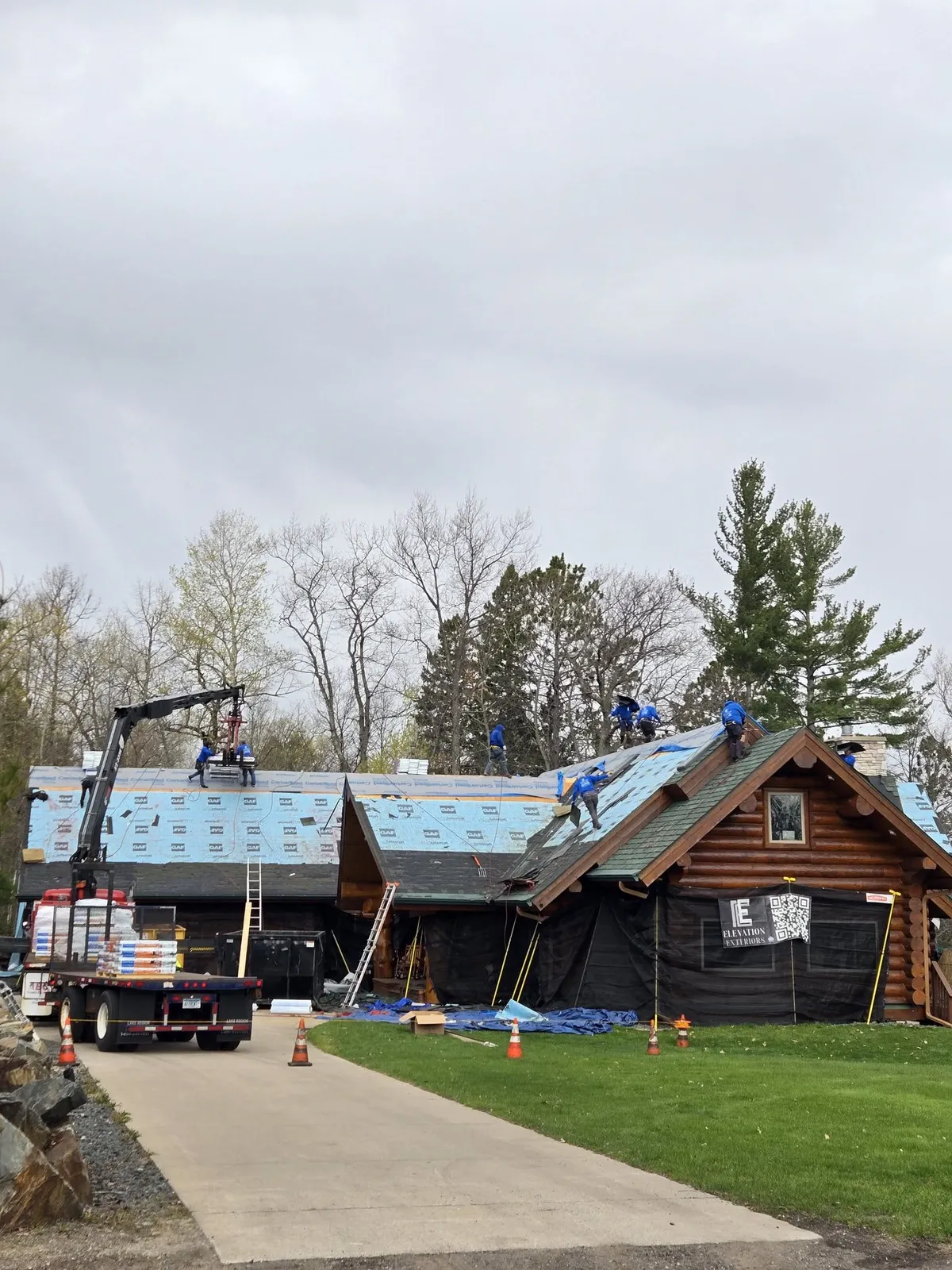
Flashing is replaced and not just caulked, shingles are matched and sealed, and pipe boots are swapped for new ones. The crew follows the same CertainTeed installation standards used on full roofs.
Step 5: Cleanup and a Magnetic Sweep
Debris is hauled off and magnetic rollers clear nails from the yard and driveway. The property is left the way it was found.
Step 6: Follow Up by Text
You get a text update when the repair is finished and a note on what to watch for after the next rain. Staying in touch after the job is part of the standard.
FAqs
Common questions Your Neighbors Are asking
How much does a roof repair cost?
The cost depends on how many areas are affected, how accessible the roof is, and whether decking or interior damage is involved. A small flashing or pipe boot repair costs far less than repairing multiple slopes. A free estimate after an inspection gives you a number for your actual roof instead of a guess over the phone.
How do I find where my roof is leaking?
Start by checking the attic for wet insulation or stained decking, then look at the roof directly above for missing shingles, cracked boots, or failed flashing. Water travels, so the entry point is usually higher on the roof than the stain. A professional inspection traces it faster and avoids the risk of walking a wet roof.
Can I just use roofing sealant or cement on the leak?
Sealant can hold briefly, but it usually fails because it treats the symptom and not the cause. Flashing and boots wear out as parts, and sealing over them rarely lasts through a Minnesota winter. A proper repair replaces the failed component.
Is it worth repairing an older roof?
It can be, if the damage is isolated and the decking is sound. If the roof has widespread wear or repeated leaks, putting the money toward a replacement is often the better value. An honest assessment of both options is the starting point. Learn more about repair or replace.
Elevating Exteriors Across The Greater Twin Cities.
St. Francis MN
East Bethel MN
Blaine MN
Anoka MN
Coon Rapids MN
Ramsey MN
& More




The Twin Cities' Trusted Exterior Contractor. Proudly Serving Andover, MN and the surrounding NW Metro.
Licensed & Insured in MN: #cR806992
Copyright 2026. Elevation Exteriors. All rights reserved.